 You are here:
Automatic Riveting Equipment for Server Cabinets and Data Centers
Server cabinets, network cabinets, telecom cabinets and the enclosures that fill data centers are heavy rivet users: one cabinet can carry a hundred rivet points or more across its frame, doors, hinges, shelves and mounting plates, and the orders come in large batches with tight delivery dates. It is also one of the sectors where automatic riveting equipment is most mature and pays back fastest.
1. How Cabinet Riveting Is Done Today
A cabinet starts as cold-rolled steel or aluminum sheet, bent and welded into a frame, and most of the attachments then hang off blind rivets: door hinges, lock rods, stiffeners, shelf brackets, mounting rails, grounding parts, ventilation panels and more. The traditional method is an operator with a pneumatic rivet gun who picks a rivet by hand, inserts it and squeezes the trigger. With a hundred-plus points per cabinet and two or three people needed to keep up, the problems cluster in three places: output falls off during long stretches of repetitive motion; missed and unseated rivets are only found at inspection or, worse, at the customer site; and hiring and holding onto workers in peak season is hard.
2. What Automatic Riveting Equipment Adds to a Cabinet Line
| Step | Manual / pneumatic | Auto-feed blind rivet machine |
|---|---|---|
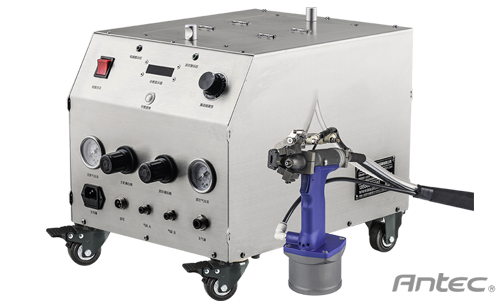
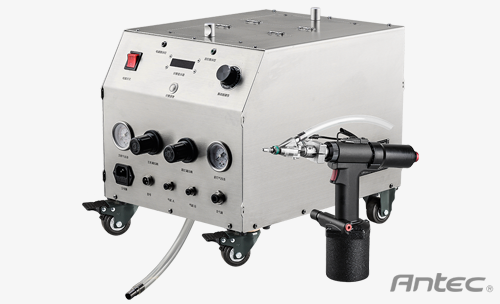
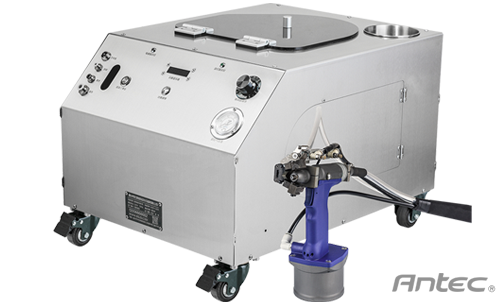
| Rivet pick and load | One rivet at a time, by hand | Vibratory bowl sorts the rivets and blows each one to the nosepiece; trigger and set |
| Cycle time | Capped by operator speed | Steady cycle (about 80 cycles/min as a reference figure for the rivet machine; confirm by actual test) |
| Labor | Several people, fatigue sets in | 1 machine takes over the repetitive work of about 3 workers |
| Quality | Missed and unseated rivets caught by manual checking | Rivet counting prevents misses, settings stay consistent, defect rate drops sharply |
| Surface protection | Nosepiece easily scratches powder-coated surfaces | Matched nosepiece plus correct gun angle means fewer press marks on cosmetic parts |
3. Two Industry Cases
At one server chassis plant the riveting station had become the bottleneck for the entire line, because rivet feed was slow and operators stood waiting for the next rivet; after the auto-feed setup went in, the cycle time and capacity problems were solved. The full story is in the aluminum chassis and electrical cabinet production case. Another enclosure and cabinet maker ran the numbers and found its automated equipment replaced several full-time riveters, so peak season no longer means emergency hiring; see the sheet metal and stainless steel fabrication automation case. What these companies have in common is a high degree of cabinet standardization, large batches per model and fixed rivet positions, so the automation payoff shows up right away.
4. Implementation Priorities for a Cabinet Line
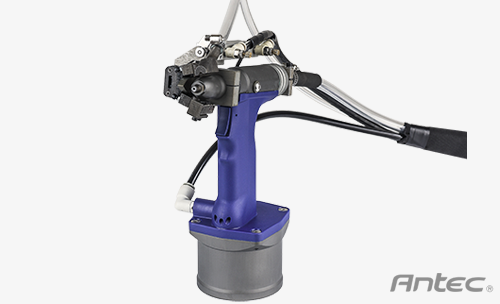
First, configure the equipment by cabinet type: flat parts such as doors and shelves suit a fixed dedicated machine or a fixture, while frames and final assembly suit a hand-held auto-feed gun. Second, use the counting function. Program the standard rivet count for each cabinet and the machine alarms the moment one is skipped, which moves quality from after-the-fact inspection to in-process error proofing. Third, when assembling after powder coating, choose the right nosepiece and control the gun angle to prevent press marks. Fourth, consolidate rivet sizes: a cabinet range uses only a handful of rivets, and consolidating them sharply cuts the number of changeovers. Fifth, pilot on the highest-volume standard cabinet first and extend the proven setup to non-standard cabinets. For the trial process, see on-site machine trial policy and process; for equipment types, see hand-held, fixed, dual-gun and robotic cell comparison.
Cabinet Industry FAQ
Common Questions About Cabinet Riveting
The machine counts rivets. Set the standard rivet count and it alarms if the job is short; combined with a station work instruction and first-article confirmation, the risk of a missed rivet drops sharply.
Use a nosepiece matched to the rivet head, hold the gun square to the surface and control pull force, and cosmetic faces come out with no obvious marks. Run a sample first to confirm.
The usual combination is automated equipment for standard cabinets and pneumatic tools kept for non-standard ones. Where the rivet size is the same, a hand-held auto-feed gun serves multiple models just as well.
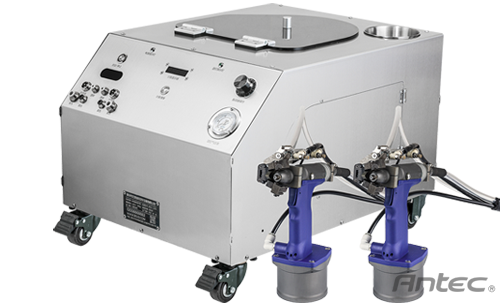
For symmetrical rivet patterns and stations that set the pace of the line, two guns working at once is worth considering. It depends on the station layout and a cycle-time study, so let the manufacturer propose the configuration.
The machine goes live right after on-site training, and a typical high-volume line pays back in 2-6 months. Verify it with one month of real data from the pilot station.
Need a Faster Cabinet Riveting Line? Send Us Your Cabinet Drawings
We size a hand-held or fixed solution to your rivet count and rivet sizes, with on-site sample runs available worldwide. Call +86 13556668682.
5. Four Common Mistakes in Cabinet Plant Retrofits
Mistake one: watching only the final assembly station and overlooking that sub-assemblies such as doors and shelves became the bottleneck much earlier; cycle times should be measured at every station before setting the retrofit order. Mistake two: installing the equipment but never switching on rivet counting, still relying on manual checks, so the risk of a missed rivet is never really removed. Mistake three: never consolidating rivet sizes, so one line stocks a dozen nosepieces and feed tracks and changeover time eats the gain. Mistake four: buying without a trial and scheduling production from the speed in the manufacturer's brochure, when the real cycle time on your own parts may be completely different. The right approach is to pilot on the highest-volume standard cabinet, run continuous samples with production rivets, log cycle time, jam rate and appearance, and copy the setup to other stations after a month of steady running. For how to make the retrofit decision, see why factories invest in custom automated riveting equipment.
Further reading: sheet metal and stainless steel fabrication automation, aluminum chassis and electrical cabinet production case and how to calculate cycle time and output
 Previous