 You are here:
Automatic Blind Rivet Machine ROI: Payback Math and 6 Signals
Why Buy a Non-Standard Automatic Blind Rivet Machine? Payback Logic and the Signals to Watch
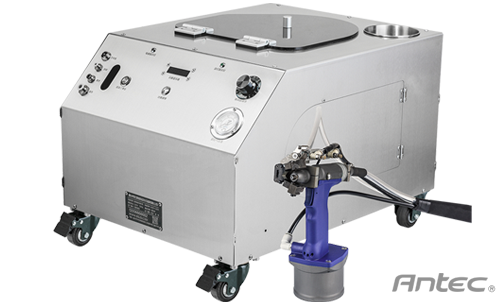
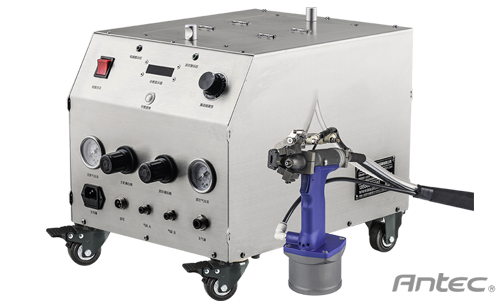
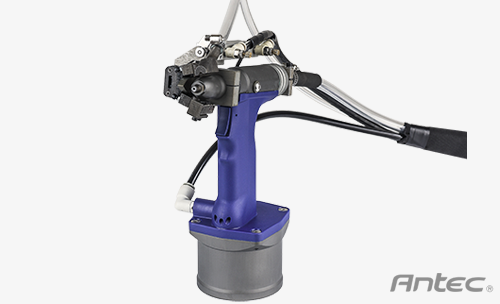
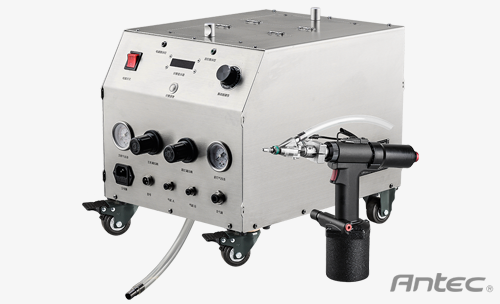
"Non-standard automation" means equipment built around a customer's product and process. The automatic blind rivet machine is a textbook case: the main unit is standard, while the feed channel, nosepiece and fixture are made to suit the rivet and the workpiece. Plenty of plants stall on the question of whether to buy one at all. This article skips the theory, works through the payback math and lists the signals that say it is time to automate.
1. The Hidden Cost of Hand Riveting
Hand riveting looks like it saves you the price of a machine. In practice the cost has four parts: (1) direct labor, because picking up a rivet, inserting it, aligning the hole and pulling the tool are manual at every point, and a line often needs 2-3 riveters; (2) quality cost, since fatigue and differences in skill produce missed rivets, stripped threads and scratched panels, which come back as rework and customer complaints; (3) capacity swings, because hiring is hard in peak season and temporary workers deliver unstable output; (4) management cost, covering training, scheduling, inspection and shop-floor supervision. The automatic blind rivet machine takes over exactly these repetitive, standardizable motions.
2. The Payback Logic: A Calculation You Can Run
| Item | What changes after automation |
|---|---|
| Labor | One machine replaces about 3 riveters, and one operator can tend several machines or stations |
| Efficiency | A steady 80 cycles per minute; overall efficiency can rise by up to about 3x |
| Quality | Auto-feed that does not jam, with fewer missed rivets, stripped threads and scratches, so rework falls |
| Capacity | No dependence on skilled labor; peak-season output becomes predictable, so you can take the large orders |
| Payback period | 2-6 months to recover the machine investment is common on lines with steady volume |
The method is simple. Take the fully loaded annual cost of one riveter (wages, social insurance, housing and meals, management), multiply by the number of operators the machine replaces, and you have the annual saving. Add the gains from lower rework and higher output, then compare the total with the equipment investment. Antec does not make off-the-shelf promises such as "always saves 50%" that ignore your actual process; we recommend running the calculation on the cycle time and yield measured in a free on-site trial.
3. Six Signals That You Are Ready for a Machine
(1) The riveting station has needed two or more people for a long time, and hiring or retaining them is hard. (2) In peak season the riveting step throttles capacity, so you turn down large orders or ship late. (3) Rework and complaints from missed rivets, stripped threads and scratches keep coming back. (4) The product is highly standardized, the rivet sizes are fairly fixed and there are many rivet points. (5) You plan to automate the line or integrate a robot, and riveting is one link in it. (6) Customer audits now ask for process consistency and traceability. If any two or three of these apply, a trial run and a payback calculation are worth the time.
4. You Do Not Have to Automate All at Once
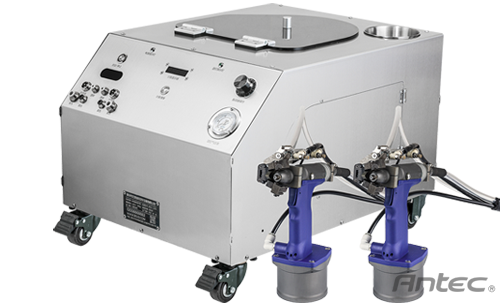
Automation can be phased. Start with a standard hand-held or fixed machine at the station that hurts most and let the measured savings prove the payback, then extend to dual guns, multiple machines and robotic riveting cells. Standard machines ship straight from stock and need little capital, while custom machines are built around your workpiece. At either stage you can book a free on-site trial before you commit. For a worked example from the enclosure and cabinet industry, see automation efficiency in sheet metal and stainless steel fabrication.
5. Common Concerns, Answered Straight
"Orders are unstable, so the machine will sit idle." An automatic blind rivet machine is not a single-purpose special machine. Hand-held and fixed models can be shared across products and lines, similar rivet sizes only need a different nosepiece, and high-mix low-volume work suits them too, so the idle risk is far lower than with dedicated equipment.
"My workers will not know how to run it, and maintenance will fall behind." Operation has a low barrier. Antec installs and commissions the machine on site at delivery and trains your operators on running and maintaining it, so a beginner can be productive after a short session. Day to day it needs only cleaning, lubrication and replacement of wear parts such as the nosepiece, and the factory can support you on site.
"The one-time investment feels heavy." We support phased spending: a hand-held pilot, then a fixed station, then a dual-gun or robotic cell. Let the labor savings from the first machine show up before you expand. Standard machines ship from stock for a small outlay, and most lines pay back in 2-6 months.
"What if it does not match my parts after I buy?" That is exactly why we trial first. An engineer brings the machine to your plant and runs your own workpieces, and you confirm the solution only after the cycle time, pull force and yield have all been measured. For non-user-caused issues there is a 7-day return and a 15-day exchange, which keeps the decision risk low.
Common Questions About the Automation Decision
Decision FAQ
Start with a standard hand-held machine. It moves easily, covers multiple product types and can be shifted between lines when orders swing, so you do not need a dedicated line on day one.
Yes. Similar rivet sizes are handled by changing the nosepiece, and the machine's main saving is the universal pick-and-insert motion, which has little to do with batch size. The payback period is simply a little longer.
Payback depends on local labor cost, shift pattern, the number of rivet points and the yield improvement you achieve. It is only reliable when calculated from your own data and the cycle time measured in a trial run.
Most customers move them into machine tending, quality inspection or multi-skill roles. One operator can watch several machines and the physical workload drops. Automation here solves repetitive rivet loading and peak-season hiring, not headcount cuts for their own sake.
Global customers: send your output and station data and we will calculate your payback period
We can bring the machine on site to measure cycle time and yield, so the numbers come from your own line. Call +86 13556668682.
Further reading: How Many Rivets Can an Automatic Blind Rivet Machine Set per Minute? · Automatic Blind Rivet Machine Buying Guide (Full Version) · How Much Does an Automatic Blind Rivet Machine Cost?
 Previous