 You are here:
Automatic Blind Rivet Machine Price: What It Costs in 2026
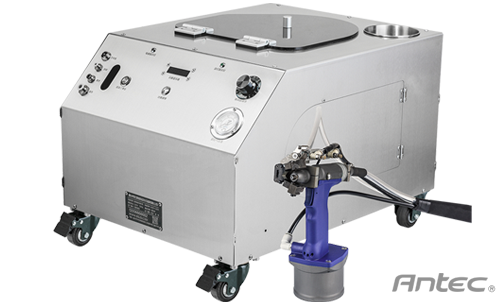
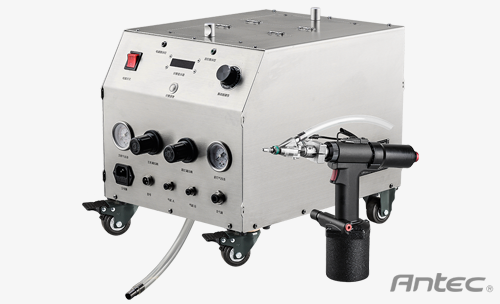
Appliance housings, aluminum profile enclosures, stainless steel kitchen equipment, hardware furniture and battery tray manufacturers all ask the same question first: what does an automatic blind rivet machine actually cost? Most of these machines are custom builds, so there is no one-size-fits-all list price. The quote moves with pull force, gun count, feeding and error-proofing options, frame style and robot integration. Using 2026 market pricing, this guide breaks down what drives the quote, how the right configuration changes with the workpiece, and how to work out payback at the station, so buyers can compare offers on equal terms instead of being pulled in by a low price and a thin specification.
1. What Makes Up an Automatic Blind Rivet Machine Quote
| Cost item / configuration | Effect on total price | What to check |
|---|---|---|
| Machine pull force and size | Ø2.4–3.2 small models and Ø4.8–6.4 high-pull-force models differ sharply in price | Stainless kitchen equipment and hardware square tube need headroom in pull force |
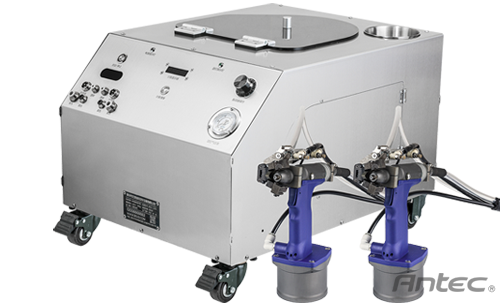
| Single gun or dual-gun (one machine, two guns) | Dual guns let two operators rivet at once and nearly double output; the price is higher than a single gun | On appliance and cabinet batch lines, work out dual-gun payback first |
| Feeding and error-proofing | Missing-rivet detection, point counting, seating confirmation and IO integration are add-on items | Lines that miss rivets on peak-season night shifts justify the counting option |
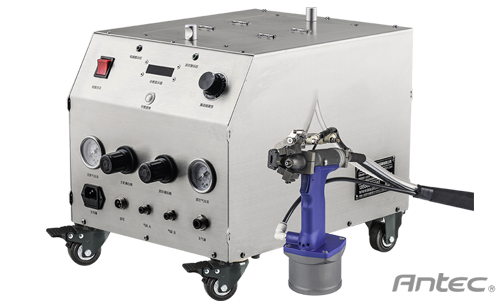
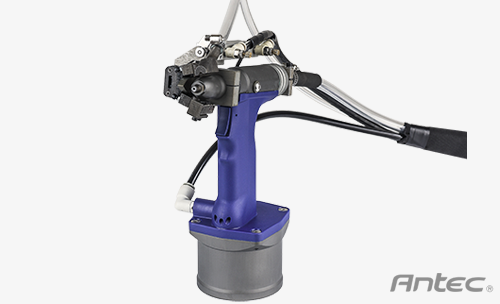
| Machine format | Handheld is the lowest-cost option; bench, suspended, in-line and robotic versions step up in price | Choose by station space and automation stage, not all at once |
| Custom work and integration | Special nosepieces, fixtures, robots and line integration are priced by workload | Aluminum profile slots and high-visibility panels need dedicated nosepieces and fixtures |
2. Configuration Priorities Differ by Workpiece
| Typical workpiece | Common configuration | Why it fits |
|---|---|---|
| Appliance housings and brackets | Dual-gun (one machine, two guns) with mar-free nosepieces | Dense rivet points on coated and painted surfaces; no marking and cycle time come first |
| Aluminum profile enclosures and cabinets | Fast-feed handheld machine with aluminum nosepieces | Frequent changeovers across many models; rivets must feed smoothly into the slots |
| Stainless kitchen equipment, hardware furniture | High-pull-force models above 12800 N | Stainless steel and square tube, with mixed rivet sizes |
| Battery trays, automotive structural parts | In-line counting or a robotic riveting workstation | Consistency, error-proofing, traceability and pull-force records are all demanded |
3. Run the Numbers at the Station
Auto-feed runs about 80 cycles per minute, and one machine replaces roughly three riveting operators. On the staffing and two-shift basis common in appliance and metalworking shops, an assembly line that needed four riveting operators usually runs with two people watching the machine after a switch to dual guns, and most lines recover the investment in 2–6 months. The higher the volume and the more night shifts, the faster the payback. When comparing quotes, do not look at the bare machine price alone. Ask all five questions at once: does it include on-site installation, commissioning and operator training; how many years is the whole-machine warranty; what do wear parts cost per unit and what is the lead time; how are custom nosepieces and fixtures charged; and is the on-site trial free?
Five Buying Steps
- 1 Collect the specsList rivet sizes, material thickness, rivet points per machine and daily output for the last three months
- 2 Send drawings for a first passThe supplier proposes handheld, dual-gun or robotic options and a price band for the workpiece
- 3 On-site sample runBring the machine to the plant and test cycle time, pull force and yield on real orders
- 4 Cost per stationUse measured cycle time and local labor rates to calculate headcount saved and payback
- 5 Sign on clear termsConfirm the configuration list, warranty, spare parts, lead time and training before signing
4. Three Quoting Traps to Avoid
First, comparing bare machine prices and ignoring the long-run cost of nosepieces, wear parts and on-site service. Second, trimming the price by choosing a low-pull-force model to set stainless steel and large rivets, which starts failing within a few months. Third, ordering without a trial and finding out on arrival that rivets feed poorly or the panel is marked. The safe route is to send rivet specs and workpieces first, then book the free on-site trial and decide on measured data. Further reading: free on-site trial policy and process, automatic blind rivet machine selection guide (full article).
FAQ
Yes. Tell us the rivet size range, workpiece type and planned output, and in about 10 minutes we can give you the matching configuration and price band. The final figure follows the configuration confirmed at the trial.
Common standard models are in stock and ship quickly to customers worldwide. Custom dual-gun, in-line and robotic workstations are scheduled by project, and the lead time is written into the quote and the contract.
Global customers: send specs and workpieces for a price band
Send the rivet specs, surface finish and output to our engineers. We can bring a machine to your plant for a sample run, so you decide after the trial.
 Previous