 You are here:
Automatic Riveting Equipment for EV Charger and Inverter Cabinets
EV chargers, power distribution cabinets, PV inverters and energy storage converters all share the same basic housing: a sheet metal enclosure. Most of them sit outdoors or in semi-sheltered locations, so corrosion resistance, sealing and connection reliability are held to a higher standard than on ordinary indoor cabinets. Riveting (blind rivets plus rivet nuts) is one of the main mechanical fastening methods for these products, and the process details directly shape the enclosure's protection rating and long-term reliability. That is also why automatic riveting equipment is now standard on outdoor power cabinet lines.
1. Connection Requirements for Outdoor Power Equipment
First, corrosion resistance. Temperature swings, rain and salt spray outdoors mean the fastener material has to match the sheet material. Stainless steel rivets and nuts, or zinc-flake (Dacromet) and zinc-plated finishes, are the usual choices. Second, sealing and ingress protection. Doors and cover plates have to hold their IP rating, so any threaded hole that must stay sealed should use a blind (closed-end) rivet nut. Third, reliable electrical connections. Grounding hardware, busbar brackets and device mounting rails carry component weight and absorb vibration, so they cannot be allowed to work loose. Fourth, assembly after painting. The cabinet is powder coated first and riveted afterward, so the coating must not be damaged.
2. Typical Locations and Fastener Selection
| Location | What Is Joined | Recommended Fastener |
|---|---|---|
| Door panels, hinges, lock rods | Frequent opening and closing, vibration resistance | Stainless steel blind rivets; structural types at load-bearing points |
| Device mounting plates and rails | Breakers, modules and terminal blocks | Hexagonal or knurled rivet nuts to resist rotation and torque |
| Waterproof covers and bases | Sealing, protection against liquid ingress | Blind (closed-end) rivet nuts plus sealing washers |
| Grounding hardware | Ground continuity, resistance to loosening | Locking rivets and nuts; keep the mating surfaces conductive |
| Heat sinks and outer shrouds | Thin walls, visible surfaces | Countersunk rivets and nuts for a flush finish |
3. Process Points That Matter
First, choose through-hole or blind nuts by location. Plain internal threads are fine with a through-hole nut, but anything that must stay watertight needs a blind, closed-end nut; the operating differences between the two are covered in through-hole vs. blind rivet nuts: key operating points. Second, follow the specification table for the prepunched hole. A hex nut needs a hex hole, and an out-of-tolerance hole is the main reason nuts spin and water seeps in. Third, when riveting after powder coating, strip the coating at grounding points or fit a grounding star washer so ground continuity is maintained. Fourth, run a water test on the first article at every sealed location. Fifth, stainless fasteners work-harden noticeably, so pull force and mandrel setup have to be configured per size. For a comparison of fastener types, see cylindrical, hexagonal, through-hole and blind rivet nut types compared.
4. Choosing Automatic Riveting Equipment
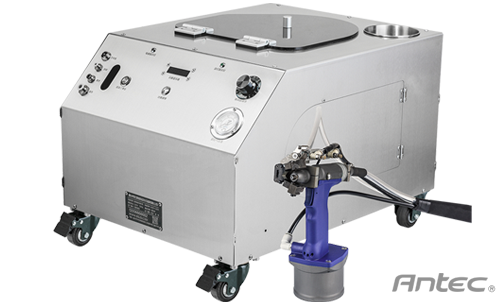
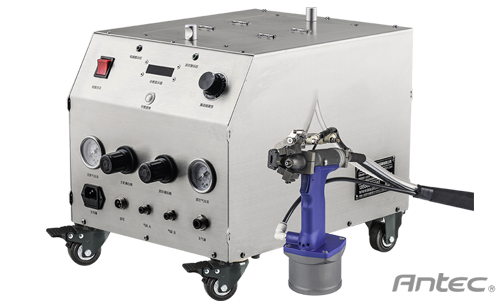
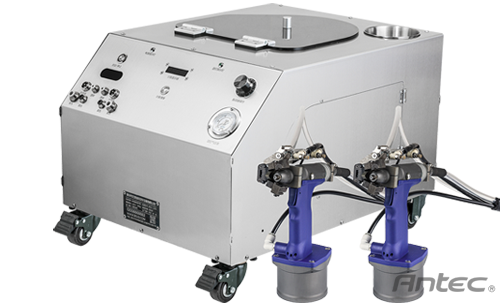
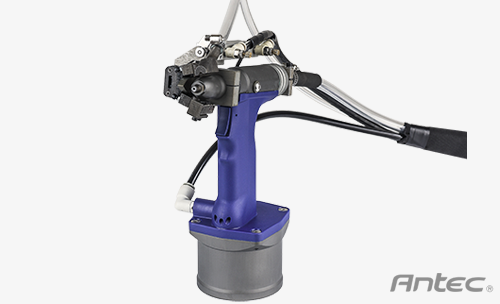
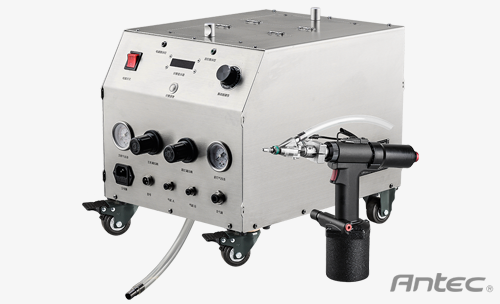
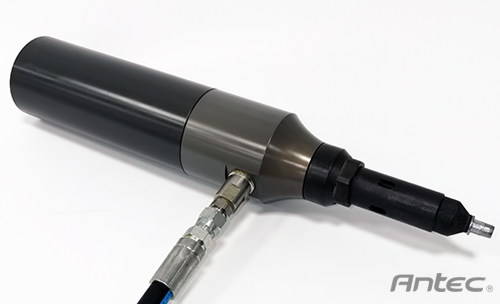
Power cabinets are large, heavy and awkward to turn over, so these lines are built around handheld auto-feed tools. An automatic blind rivet machine handles the rivets on frames and door panels, and an automatic rivet nut gun handles the threaded holes in mounting plates. The operator works around the cabinet while rivets and nuts travel to the nosepiece through a feed tube. Fixed dedicated machines suit batch work on flat, regular parts such as doors and mounting plates, and robotic cells suit very high volumes of standard cabinets. Charger and distribution cabinet builders worldwide can book a free on-site trial, with a Antec technician bringing the machine to the plant to run the customer's own cabinet.
Power Equipment Riveting FAQ
Common Questions from the Power Equipment Industry
Stainless steel rivets or rivets with a zinc-flake coating are the usual choice. For coastal or high-humidity sites, go with stainless steel, and check galvanic compatibility with aluminum panels.
Use blind, closed-end rivet nuts with sealing washers in any threaded hole that must stay dry. Run a water spray or air-tightness check on the first article, then spot-check at fixed intervals in production.
Yes. The grounding point has to stay conductive through the powder coating, so use a star (bonding) washer or mask a conductive area before riveting, and test ground resistance against the applicable electrical standard.
Changeover means swapping the mandrel, nosepiece and feed channel. Label each set, confirm the first article after every change, and keep separate feed bowls or bins per size at high-mix stations.
Yes. Match the nut to the material thickness, use a smaller size and lower pull force on thin sheet, and confirm with a test rivet on sample coupons first.
Riveting Process Review for Chargers and Distribution Cabinets
We build the proposal around your cabinet material, protection rating and fastener specifications, with on-site machine trials available worldwide. Call +86 13556668682.
5. Implementation Advice for Power Equipment Manufacturers
We suggest moving in three steps. Step one: pick one high-volume outdoor cabinet model as a pilot and settle the fastener plan for all three zones (doors, mounting plates and waterproof covers), mapping which points get stainless rivets, which get hex rivet nuts and which get blind nuts, then write it up as a process standard. Step two: complete three verifications at the first-article stage, covering go/no-go thread gauging plus pull-out testing, water spray checks at every sealed location, and a ground continuity test, then record the results in the work instruction. Step three: configure equipment and spares. Cabinet final assembly runs on a handheld auto-feed blind rivet machine and a rivet nut gun, regular parts such as doors can be evaluated for a fixed machine, and common mandrels, nosepieces and sealing washers are stocked by size. Outdoor cabinet volumes are relatively stable, which makes equipment utilization and payback easy to model; see automatic blind rivet machine maintenance and spare parts guide for the service side.
Further reading: common rivet nut gun faults and installation problems · why the server cabinet industry uses automatic blind rivet machines · automatic rivet nut gun
 Previous